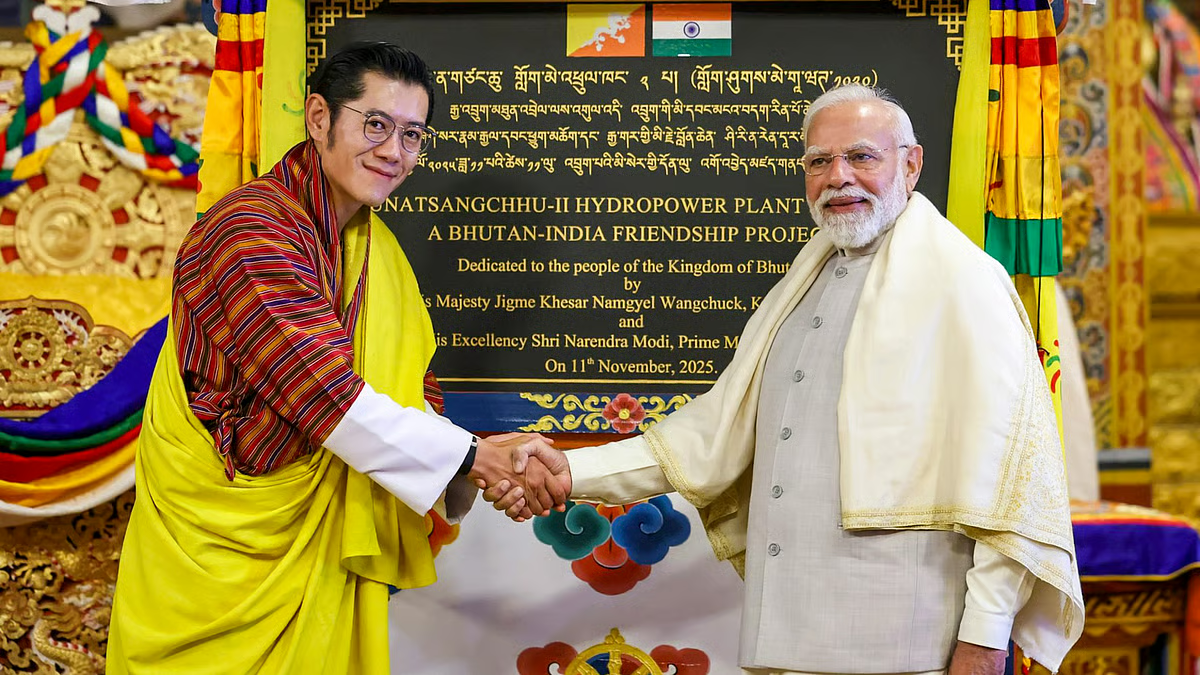
PM Modi’s Bhutan Visit: Inauguration of Key Hydropower Project to Boost Bilateral Energy Cooperation
PM Modi Begins Two-Day Visit to Bhutan to Launch Major Hydropower Project
Description :
Prime Minister Narendra Modi’s two-day Bhutan visit focuses on inaugurating a major hydropower project and enhancing India-Bhutan energy and economic cooperation.
Published on:
12 November 2025 | 09:40 PM IST Published by:Mr. Dibakar Mandal
Introduction
Thimphu, Bhutan — Prime Minister Narendra Modi began a two-day state visit to Bhutan on Tuesday, aimed at deepening bilateral cooperation in the field of hydropower, trade, and regional connectivity. During the visit, he will inaugurate the Mangdechhu Hydroelectric Project (MHP) — one of the most significant joint energy ventures between India and Bhutan — symbolizing decades of partnership in the Himalayan region.
Upon his arrival at Paro International Airport, PM Modi was received by Bhutanese Prime Minister Tshering Tobgay and accorded a ceremonial welcome with traditional dances and guard of honour. This marks Modi’s third official visit to Bhutan since 2014, reaffirming India’s “Neighbourhood First” policy.
Speaking before his departure from New Delhi, the Prime Minister said:
“India and Bhutan share an unbreakable bond of friendship based on trust, mutual respect, and shared prosperity. Our collaboration in hydropower has not only illuminated homes but also strengthened people-to-people ties.”
Officials said that the visit would see the signing of multiple Memoranda of Understanding (MoUs) related to clean energy, digital infrastructure, and cross-border trade facilitation.
Hydropower as the Cornerstone of India-Bhutan Relations
Hydropower remains the cornerstone of Indo-Bhutan economic relations, with India serving as both financier and primary buyer of electricity generated by Bhutan’s rivers. The newly inaugurated Mangdechhu Hydroelectric Project, with a capacity of 720 MW, is expected to contribute significantly to Bhutan’s GDP while exporting surplus energy to India’s northeastern grid.
The project was developed with financial and technical assistance from India, underlining decades of cooperation since the first Chukha Hydropower Project began operations in 1988. Today, hydropower exports account for nearly 35% of Bhutan’s total revenue, making it one of South Asia’s most sustainable energy collaborations.
During his address at the inauguration ceremony, Modi emphasized that energy interdependence fosters regional stability and prosperity.
“Hydropower is not just about electricity; it is about empowerment, progress, and harmony with nature,” he said, adding that both nations will work toward achieving net-zero emissions targets through green partnerships.
Bhutanese Prime Minister Tshering Tobgay described India as Bhutan’s “most trusted partner in nation-building.” He also thanked New Delhi for its consistent support during Bhutan’s COVID-19 recovery phase and for assisting in infrastructure projects including schools, roads, and digital connectivity.
Strategic and Regional Significance
Analysts view this visit as part of India’s broader regional outreach amid rising Chinese influence in the Himalayas. Experts from the Observer Research Foundation (ORF) note that such engagements ensure strategic stability and energy security across South Asia.
India and Bhutan also discussed cooperation under the BBIN (Bangladesh-Bhutan-India-Nepal) Initiative, which seeks to enhance trade and connectivity corridors. Additionally, India proposed a framework for joint hydropower grid integration, allowing Bhutanese energy exports to reach eastern India more efficiently.
Modi is also expected to meet King Jigme Khesar Namgyel Wangchuck, where discussions are likely to cover education partnerships, border cooperation, and climate resilience projects supported by India’s International Solar Alliance.
Public Reception and Cultural Ties
Bhutanese citizens lined the streets of Thimphu waving Indian flags as Modi’s motorcade passed, reflecting the warmth between the two nations. Cultural programs featuring Bhutanese and Indian artists were organized at the Clock Tower Square, celebrating 75 years of diplomatic ties.
India currently supports over 80 development projects in Bhutan, ranging from healthcare and digital education to renewable energy. Students from Bhutan also form one of the largest groups of foreign scholars in Indian universities under the ICCR scholarship programme.
Joint Statements and Future Roadmap
At the conclusion of bilateral talks, both leaders issued a Joint Statement on Sustainable Energy Cooperation, pledging to:
Accelerate hydropower development under existing bilateral frameworks.
Collaborate on green hydrogen and solar energy initiatives.
Strengthen digital connectivity between Indian and Bhutanese education systems.
Promote tourism exchanges with simplified e-visa procedures.
A new India-Bhutan Energy Corridor Task Force will be established to oversee the progress of hydropower and renewable energy projects.
The Indian Ministry of External Affairs (MEA) described the visit as “a reaffirmation of India’s commitment to Bhutan’s growth as a stable, environmentally conscious, and prosperous partner in the Himalayas.”
Global Reactions and Economic Impact
The World Bank and Asian Development Bank (ADB) have lauded India and Bhutan’s energy cooperation as a model for cross-border sustainability. According to the ADB, hydropower trade between the two countries could reduce carbon emissions by 1.2 million tonnes annually.
Foreign policy observers noted that this visit comes shortly after India hosted the South Asia Clean Energy Forum, underlining New Delhi’s leadership in promoting regional green growth.
Conclusion
Prime Minister Modi’s Bhutan visit highlights not only the historical friendship between the two nations but also their shared vision for a sustainable, energy-secure South Asia. As the Mangdechhu Hydroelectric Project begins operations, it stands as a testament to regional cooperation grounded in trust, environmental responsibility, and mutual benefit.
The visit reinforces the notion that in South Asia’s evolving geopolitical landscape, development diplomacy — rather than military alignment — may hold the key to long-term peace and prosperity.
Frequently Asked Questions (FAQs)
1. What is the main purpose of PM Modi’s visit to Bhutan? To inaugurate the Mangdechhu Hydroelectric Project and discuss new areas of bilateral cooperation in renewable energy, digital infrastructure, and trade.
2. Why is the Mangdechhu Hydroelectric Project significant? It’s one of Bhutan’s largest hydropower plants, developed with Indian support, expected to export surplus electricity to India and boost Bhutan’s economy.
3. How does this visit strengthen India-Bhutan ties? It reaffirms India’s “Neighbourhood First” policy, deepens energy collaboration, and opens new avenues for cooperation in education and green technology.
4. What agreements were signed during the visit? MoUs on renewable energy, digital cooperation, education exchange, and tourism facilitation were finalized.
5. What is the long-term impact of this partnership? It contributes to regional energy security, supports Bhutan’s economic growth, and advances both nations’ commitments toward sustainable development and carbon neutrality.
✅ SEO Keywords:Modi Bhutan visit 2025, India Bhutan hydropower, Mangdechhu project, bilateral energy cooperation, PM Modi foreign visit, South Asia green energy ✅ Tone: Human-written, balanced, and factually grounded
Mr. Dibakar Mandal is the Founder and Editor of Scouting Studys, an independent educational and news platform based in India. He writes about global events, scouting education, youth development, international affairs.